
Horses in Islam
By Anonymous
I have personally been involved in horseback riding for eight years. Riding horses has helped me through great difficulties and has pushed me to continuously be mindful of Allah SWT and the beauty He has bestowed. While I have personally enjoyed riding horses, I also previously taught others how to ride horses for a total of six years. From teaching people as young as three to people over forty, I have been blessed to witness the benefits and transformation in all age groups. I also previously worked with students who had autism, both verbal and non-verbal, and both experienced joy and excitement when riding. The beauty of horseback riding is that it is never too late to start!
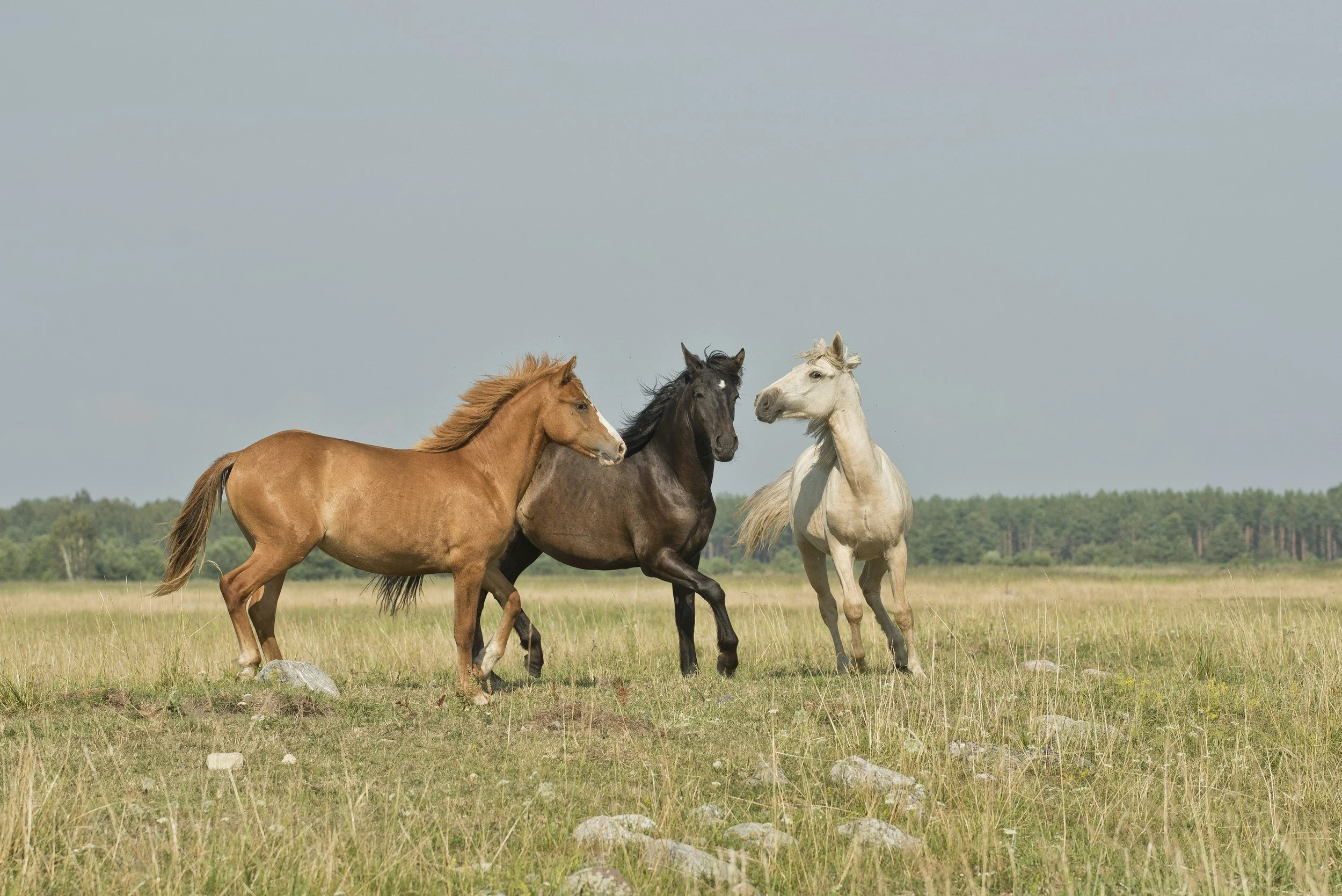
In Sunan an-Nasa'i, a narration from Ibn ‘Umar (RA), the Prophet (PBUH) said, “There is goodness in the forelocks of horses until the Day of Resurrection. ”Horseback riding is frequently noted as an activity that was loved by Prophet Muhammad (PBUH) and one that he highly recommended. In another narration by ‘Umar ibn al-Khattab (RA), “Teach your children swimming, archery, and horseback riding” (Fadailur Ramyi Fi Sabilillah). While this narration has been weakly attributed to Prophet Muhammad (PBUH), there are similar narrations that elevate the practice of riding horses. Learning to ride horses is a Sunnah practice that brings many benefits to the rider. It should be noted that the word for horse in Arabic is khayl. It shares a linguistic root with khayaal, meaning imagination, thought, or fantasy. On the other hand, it also shares the linguistic root with ikhtiyal which is defined as pride, arrogance, or vanity. The duality of the root emphasizes Allah SWT’s grace in creating such divine creatures and the human error of using Allah SWT’s creation in a way that promotes unfavorable traits such as arrogance. When involving oneself with horses, the intention remains important.
In Islam, taking care of the physical body is highly suggested and can be considered an act of worship. Abu Huraira (RA) reported: The Messenger of Allah, peace and blessings be upon him, said,
“The strong believer is more beloved to Allah than the weak believer, but thereis goodness in both of them. Be eager for what benefits you, seek help from Allah, and do not be frustrated. If something befalls you, then do not say: If only I had done something else! Rather say: Allah has decreed what He wills. Verily, the phrase ‘if only’ opens the way for the work of Satan.” (Sahih Muslim). One of the benefits of horseback riding is that it is a form of physical exercise. While riding a horse, one must engage multiple muscle groups including the core, legs, and arm muscles. Riding horses also has the benefits of improving posture, balance,
and coordination. Additionally, horseback riding provides benefits to one’s mental health. When mounted on a horse, the rider must be completely aware of their surroundings. This helps the mind focus solely on the act of riding the horse which increases one’s thoughtfulness and ability to be fully present in the moment. When I am riding my horse I notice that my mind is completely occupied by guiding him and I don’t find myself entangled in the things that I may be worrying about that day. Moreover, there are a number of local horseback riding programs in the greater Sacramento area that specialize in equine assisted psychotherapy. These programs can benefit those who experience anxiety, depression, PTSD, autism, and even autoimmune diseases like multiple sclerosis. Furthermore, riding horses is an act that requires a great deal of patience! While there is
a common misconception that riding horses means you “just sit there” , there are a number of things a rider must focus on to be successful. While learning to ride comes with difficulties, once understanding grows, it is deeply rewarding. It teaches both patience and perseverance which are both traits that help build self-confidence and self-esteem. These are two things that are
especially important for youth as they transition into adolescence and adulthood. It is important to learn from a young age that one will certainly face challenges in life, but that these can be overcome. Interacting with horses can at times cause frustration. Horses are often over 1,000 pounds and do not communicate in the same way that we do. This teaches the rider to beaccommodating, respectful, and learn to regulate their emotions. These skills carry over to relationships beyond the one between the horse and rider. Additionally, being entrusted to interact with such a beautiful creature presses the believer to be conscious of how they treat the animal. Interacting with horses teaches the rider to be responsible for one of Allah SWT’s creations. Quran 16:8 “And (He has created) horses, mules and donkeys, for you to ride and as an adornment. And He creates (other) things of which you have no knowledge”. Horses have served the purpose of being used for transportation and in the battlefields, but they should also be enjoyed by their caretaker. Taking care of horses pushes the believer to maintain a soft heart
and be mindful of Allah SWT.
The downside to being involved in horseback riding is that it is a costly activity. There are not many local facilities to keep horses as Roseville continues with rapid development. Additionally, due to the droughts experienced in California, feed prices can be quite costly. These two factors contribute to higher maintenance costs which in turn impacts the cost of acquiring horseback riding lessons. Abu Hurairah (RA) narrated that the Messenger of Allah (peace and blessings be upon him) said, "Whoever keeps a horse for the cause of Allah out of faith in Allah and believing the promise of Allah, its feed, water, urine and dung will all count as Hasanat in the balance of his deeds. " (Sunan an-Nasa'i).
References
Sunan an-Nasa'i 3573. Book 28, Hadith 13.
Fadailur Ramyi Fi Sabilillah, Hadith 15.
Sahih Muslim 2664 Book 46, Hadith 52
Quran 16:8
Sunan an-Nasa'i 3582. Book 28, Hadith 22.
