
The Architecture of Sincerity: Historical Lessons on Leadership, Loss, and Legacy from Caliph Omar Ibn Abdul Aziz
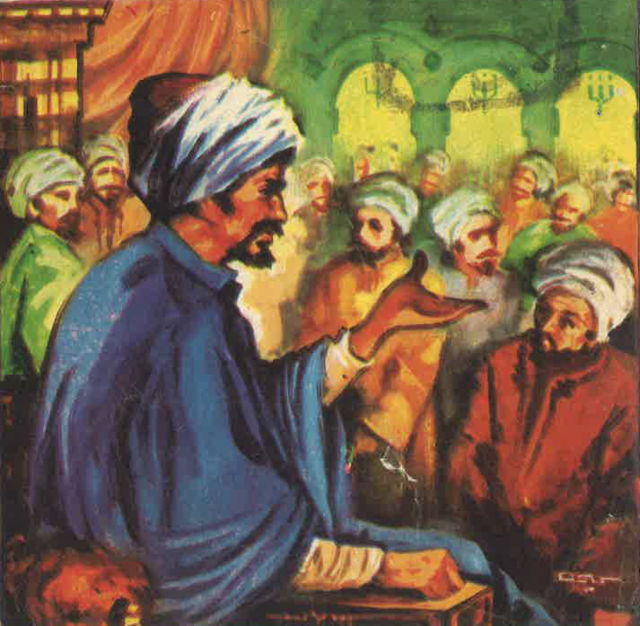
By Dr. Imam Sherif Ahmed
The Mirror of Leadership: Finding Sincerity, Solace, and Personal Transformation in the Shadow of Omar Ibn Abdul Aziz
When a person reflects deeply on the life and legacy of the Rightly Guided Caliph Omar Ibn Abdul Aziz (RA - d. 101 AH), it often feels like gazing into an unyielding, quiet mirror. It is a mirror that does not flatter; instead, it looks directly into the soul and asks the ultimate question regarding our true sincerity (ikhlas) before Allah (ﷻ).
For most of us, our lineage holds no royal distinction. We are not the children of Abdul Aziz Ibn Marwan, the powerful governor of Egypt, nor was our uncle the mighty Caliph Abdul Malik Ibn Marwan, as was the case for Omar. We occupy ordinary spaces in a vast world. Yet, despite the centuries that separate us, his life acts as a personal crucible for our own transformations.
Navigating a profound shift in circumstances—such as relocating from the material structure, high corporate incomes, and visible stability of the Gulf to the fluid, often unsettling environment of the United States—reveals the striking relevance of Omar’s biography. He was a man who once lived the textbook life of a prince, enveloped in luxury, fine silks, exquisite fragrances, and effortless comfort.
Yet, the moment the heavy mantle of the Ummah's leadership was placed upon his shoulders, his world turned upside down. The opulence vanished overnight; the weight of absolute accountability took its place. His narrative stands as an eternal reminder that when Allah (ﷻ) alters our earthly condition, strips away our safety nets, or plunges us into financial instability, it is never to diminish our worth. Rather, it is a divine intervention designed to soften the hard outer shell of the heart, purify the blemishes of the soul, and redirect our ultimate purpose. What initially feels like a painful loss can slowly, through patience, crystallize into absolute spiritual clarity.
While we do not carry the geopolitical burdens of an empire, every single one of us carries an equally weighty empire within: the responsibility of our own soul, the spiritual and physical protection of our family, and the sacred knowledge Allah (ﷻ) has entrusted to our care. True honor is never found in the transient cushions of material ease, but in remaining utterly sincere, trusting, and faithful to Allah (ﷻ) through every sudden contraction and expansion of life.
The Making of a Pure Heart: Early Lessons and the Sacred Duty of a Mentor
Spiritual transformation is rarely a sudden anomaly; it is a slow, deliberate architecture. Allah (ﷻ) plants micro-lessons in our youth, our early struggles, and even our moments of vanity, constructing the foundations of the people we are destined to become.
During his youth in Madinah, young Omar was surrounded by the finest things the world could offer. To ensure he received an education befitting both his royal status and the sacred environment of the city of the Prophet (ﷺ), his father sent him to study under the renowned scholar and spiritual mentor (murabbi), Salih Ibn Kaysan (RA). Salih was instructed not merely to instruct the boy in matters of jurisprudence and language, but to fiercely guard, shape, and discipline his internal state.
THE SCHOLAR AND THE KING
       The Princely Household  ──>  The Madinah Academy
       (Luxury & Appearance)         (Discipline & Presence)
                                │
                                ▼
                     The Intervention of a
                     Spiritual Mentor (Murabbi)
One afternoon, a seemingly minor incident occurred that changed the trajectory of Omar's internal development. He delayed attending the congregational prayer in the Prophet's Masjid. When pressed by his mentor for the reason behind his tardiness, the young prince confessed that his servant had been combing, styling, and arranging his hair.
To the casual observer, this would be dismissed as a trivial misdemeanor—the natural vanity of an adolescent aristocrat. But Salih Ibn Kaysan possessed the piercing vision of a true educator. He recognized that a love for appearance, status, and sensory comfort was beginning to anchor itself within the young boy's heart, threatening to distract him from the absolute presence of Allah (ﷻ).
Salih immediately dispatched a messenger to Egypt to inform the governor of his son’s preoccupation with luxury. The response from Abdul Aziz Ibn Marwan was swift and uncompromising. He dispatched a representative to Madinah with a singular command: to completely shave Omar’s head. This was not an act of tyrannical harshness, but an act of profound, visionary parental love. It was an intentional disruption of vanity, designed to show the boy that his worth did not lie in his hair, his garments, or his royal privileges.
This early intervention shattered the illusion of worldly exceptionalism. It taught the young prince that this world (dunya) possesses a quiet, intoxicating pull that can subtly desensitize the heart to what matters most. Because his heart was broken early and mended correctly, the pre-destined ruler emerged. The youth who once demanded custom-tailored robes and rare perfumes transformed into the Caliph who wept until his chest heaved, terrified that he might be held accountable for an animal tripping on a broken road in a distant province.
The Weight of Trust Within the Household: Living Consciously
To look into the mirror of Omar Ibn Abdul Aziz is to confront our own small compromises—the subtle ways we justify cutting corners, softening ethical boundaries, or delaying spiritual corrections simply because it is the easier path. Omar did not merely carry his responsibility; he lived it with an acute, trembling awareness that extended into the private quarters of his home.
THE OMARIC PRIVACY SHIELD
         ┌───────────────────────────┐
    ▼                                             ▼                                            ▼
   THE DIET OF THE SUFFERING    THE DELAYED ADVANCE      THE SNATCHED FRUIT
   Onions, lentils, and the   Refusing to borrow from   Protecting the child's
   concealment of poverty.    the future of public funds.  soul from illicit consumption.
The Scent of Onions and Lentils
Consider the domestic reality of the ruler of an empire that stretched from the borders of China to the Atlantic Ocean. One evening, after exhausting himself with the affairs of the state, Omar returned to his modest residence. As he crossed the threshold, he noticed his young daughters covering their mouths with their hands as they greeted him. Troubled by this collective gesture, he turned to his wife, Fatima Bint Abdul Malik, and asked for an explanation.
Fatima—herself the daughter of a Caliph, the sister of four successive Caliphs, and a woman who grew up draped in gold and serviced by retinues of maids—quietly revealed the heartbreaking truth. There was absolutely nothing in their pantry that evening except a meager portion of lentil soup and raw onions. The girls were covering their mouths not out of shame for their food, but out of immense love and sensitivity for their father; they did not want the pungent smell of onions to distress him or make him feel as though he had failed to provide for them.
Rather than breaking out into despair, Omar smiled—a beautiful, serene smile born of a heart entirely anchored in contentment (rida). He embraced his daughters, kissing them one by one, and whispered words of eternal comfort:
"O my daughters, what would it benefit you if your father provided you with rich foods and delicious delicacies every day, if it meant that your father would be dragged face-down into the fire of Hell on the Day of Judgment?"
The Tears of Eid and the Fragility of Tomorrow
On another occasion, as the festival of Eid approached, his home was filled with the sound of weeping. He found one of his young daughters crying bitterly because her neighborhood peers had purchased new, vibrant garments for the celebration, while she was forced to wear her old, heavily patched dress. The natural, protective heart of a father was deeply pierced by her simple sorrow.
Hoping to alleviate her sadness within legitimate boundaries, Omar approached the overseer of the public treasury (Bayt al-Mal) and asked if it would be permissible to receive an advance on his personal stipend for the upcoming month, solely to purchase a modest dress for his child.
The treasury official, an upright man trained under the same rigorous standard of integrity, looked at the Caliph and asked a single, chilling question:
"O Leader of the Believers! Can you provide me with a written guarantee that you will remain alive for the next thirty days, so that you may fulfill the labor required to earn the advance you are asking for?"
The question struck Omar like a physical blow. He thanked the official, immediately revoked his request, and returned home empty-handed. He sat beside his weeping daughter, pulled her close, and balanced her worldly pain with the weight of eternity, asking:
"O my beloved daughter, be patient. Will you not be content that we should walk through the gates of Paradise together, adorned in the garments of eternity, because we refused to compromise our trust in this fleeting world?"
The Snatch of the Charity Apple
Perhaps the sharpest demonstration of this domestic vigilance is the famous incident of the charity apple. A shipment of apples arrived in Madinah as part of the public zakat collections meant for distribution to the destitute. Omar was overseeing the inventory when one of his young sons, attracted by the bright color and sweet fragrance of the fruit, plucked an apple from the pile and bit into it.
The reaction of the Caliph was instantaneous and visceral. He did not gently negotiate; he rushed forward and firmly snatched the partially eaten apple directly out of his son’s small hand. As the child broke out into tears and ran to his mother, Omar stood there, holding the fruit with a shaking hand.
Fatima, witnessing this intense scene, wept out of a mixture of maternal heartbreak and awe, knowing there was not a single piece of fruit in their home and that her child had craved something so small. Omar looked at her, his own eyes brimming with tears, and confessed:
"By Allah, when I snatched it from his hand, it felt as though I was tearing out a piece of my own heart. But I swear by Him in whose hand is my soul, I would rather my son starve to death than have me stand before Allah on the Day of Judgment, answering for a single fruit stolen from the wealth of the orphans and the needy."
Shadows in the Night: Hidden Grief and the Breakdown of the Ego
True spiritual maturity is not verified by the public speeches we deliver or the professional titles we display; it is measured by our awareness when the world is fast asleep. It is found in whether our shoulders are strong enough to carry our amanah without fracturing into vanity.
Fatima recounted that during his caliphate, she would frequently wake up in the dead of night to the sound of muffled, convulsive sobbing coming from Omar’s prayer rug. On one specific night, his weeping was so intense that she feared his spirit would leave his body. She approached him, placing a comforting hand on his shoulder, and pleaded, "O Omar, what is causing you such profound grief? You are the ruler of the lands, the people love you, why do you torment yourself so?"
Omar turned his tear-stained face toward her and bared the internal agony of true leadership:
"O Fatima, I have been burdened with the absolute care of the Ummah of Muhammad (ﷺ). From the furthest corners of the East to the West, I see the starving child, the neglected widow, the sick person who cannot afford medicine, the lonely stranger, the oppressed prisoner, the old man who must labor until his bones ache, and the father who cannot feed his large family.
I know with absolute certainty that my Lord, the King of Kings, will systematically ask me about every single one of them on the Day of Resurrection. I know that the Prophet (ﷺ) himself will stand as the advocate against me on behalf of his vulnerable followers. I realize I will have no valid defense to present. When I think of that moment, my heart shatters, and my tears refuse to stop."
This persistent internal weeping dramatically altered his physical form. Historians note that prior to his appointment as Caliph, Omar was recognizable by his stately gait, his full and healthy countenance, and his elegant presence. Toward the end of his two-year reign, a traveler who had known him in his youth arrived in Damascus and requested an audience. When he was shown into the presence of the Caliph, the traveler froze, unable to recognize the man sitting before him.
The robust prince had withered away into an incredibly thin, gaunt, and physically exhausted figure. His eyes were deeply sunken from sleepless nights, his skin had turned sallow, and his garments were coarse and frayed. The visitor was visibly shocked, unable to comprehend how the most powerful executive on earth could choose to live in a state of self-imposed poverty.
But this was not a tragic story of loss; it was the ultimate realization of clarity. Omar understood that authority is not an instrument for self-elevation, but an obligation to lower oneself before the Majesty of the Divine. He lived his life illuminated by the sobering reality found in the Holy Qur'an:
وَمَا كَانَ رَبُّكَ نَسِيًّا
“And never is your Lord, forgetful.”
Surah Maryam (19:64)
Standing by the Grave: Processing Loss with Unwavering Surrender
The mirror of Omar becomes deeply intimate when we examine his relationship with his beloved son, Abdul Malik. Unlike many children of royalty who exploit their fathers' titles for personal advancement, Abdul Malik was a towering spiritual titan in his own right. He acted as his father's constant conscience, frequently entering his private chambers to urge him onward: "O my father! Establish the truth boldly, and do not fear the blame of the critics. What will you say to your Lord if you leave a single injustice unrectified out of a desire to maintain political ease?"
Omar would look at his youthful son with immense gratitude, replying, "Praise be to Allah who has given me a son who assists me in guarding my soul."
Yet, in a sudden twist of divine decree, only a year after Omar ascended the throne, this exceptional young man fell severely ill and passed away at the age of nineteen.
THE PATHWAY OF SACRED GRIEF
   Deep Personal Loss ──> Heartbreak ──> Absolute Surrender to Decree
   (Burying the Child)    (The Dunya    (Returning Entirely to the One
                          Shatters)      Who Never Dies)
The grief of a father burying his child is a pain that words cannot accurately translate. Standing by the edge of the freshly dug grave, looking down at the white shroud enclosing a piece of his own soul, Omar did not break out into loud lamentations. With trembling hands and tears streaming down into his beard, he looked at the earth and spoke words that have echoed down through fourteen centuries:
"May Allah have mercy on you, O my beloved son. You were an exemplary son to your father. From the day you were born until the moment I placed you into this earth with my own hands, you brought nothing but joy to my heart.
By Allah, I have never been more certain of my need for Allah’s mercy than I am at this very moment. We belong to Allah, and to Him we shall surely return. I am entirely content with what my Lord has decreed."
For anyone whose hands have trembled under the weight of a similar reality, this narration ceases to be an academic history lesson; it becomes an active, breathing mirror. To have walked out of a hospital room in the dead of night, leaving a grieving spouse behind, to carry a small, lifeless body alone in the silent vacuum of a car—that experience reorders the human psyche.
Driving for hours toward a dark, isolated graveyard at two in the morning, watching the headlights cut through the empty roads, creates a silence that never truly leaves the heart. Walking alongside a few quiet souls into the cold earth, lowering your child into their final resting place, and whispering a final salam permanently shatters the illusion of permanence.
The man who lived over a millennium ago experienced that identical heartbreak. His response teaches us a profound reality: this dunya was never constructed to be our final resting place. We are merely passing travelers, carrying a heavy bundle of love, loss, ambition, and grief until we are called back to the One who never dies. The people closest to Allah (ﷻ) are not exempt from suffering; rather, they are those who utilize their brokenness as a compass to guide them back to the Divine gate in absolute, unreserved surrender.
Redefining Greatness: The True Architecture of a Legacy
As his own death approached, brought on by illness and the physical exhaustion of his intense reign, his advisors gathered around his bed. They were deeply worried about the future of his large family. Because Omar had strictly refused to draw more than a basic survival stipend from the state treasury, he was dying without a fortune, leaving behind more than ten children with virtually no inheritance.
They pleaded with him, saying, "O Leader of the Believers, you are leaving your children destitute. Entrust them to the care of the wealthy nobles or allocate a special fund for them from the treasury so their futures may be secure."
Omar, breathing heavily, requested to be lifted up so he could face them with full presence of mind. He looked at his companions and declared with unwavering resolve:
"I have never withheld from my children a single coin that rightfully belonged to them, nor will I ever give them a single coin that belongs to the public.
Listen closely: my children fall into one of two categories. Either they will grow up to be righteous servants of Allah, and if so, Allah has promised in His Book that He protects the righteous. He will open doors for them from sources they cannot conceive. Or, they will grow up to be corrupt and disobedient, and if that is the case, I will certainly not leave behind wealth that would serve as a tool to aid them in their disobedience to my Lord."
He then called his children to his bedside, looked upon them with eyes full of paternal tenderness, and said: "O my children, your father was given a choice: either to make you wealthy in this world while risking his own soul in the fire, or to leave you poor while securing his safety before Allah. I have chosen your father’s salvation over your worldly luxury, hoping that we will meet together in a grand palace in the Hereafter, where no injustice can ever touch us."
THE PARADIGM SHIFT OF INTENTIONAL LEGACY
    STAT-DRIVEN SUCCESS         OMARIC SUCCESS
    ┌─────────────────────────┐
     • Vast Financial Assets          • Ikhlas (Sincerity)
   • Corporate Prestige       VS    • Beneficial Knowledge
     • Visible Monuments              • Restored Justice
    • Transient Reputation           • Eternal Security
    └─────────────────────────┘
This definition of legacy stands in stark opposition to how our modern society conceptualizes achievement. For many years, particularly within prosperous corporate environments, success is calculated through net worth, real estate portfolios, executive titles, and visible markers of material power. But the story of Omar disrupts this framework entirely.
Consider the narrative of the old, impoverished woman who traveled a massive distance from Iraq to the capital of Sham, seeking financial assistance from the Caliph. In her mind, she expected what anyone of her era would expect: a sprawling marble palace, rows of heavily armed guards, layers of bureaucratic secretaries, and an display of imperial wealth.
When she finally arrived at the address she was given, she stood frozen in disbelief. Before her stood a modest mud-brick house with no guards at the gate. She entered tentatively and found Fatima Bint Abdul Malik sitting on a simple mat, spinning cotton by hand.
While they were speaking, a man entered the room. He was dressed in worn clothing, carrying a heavy bucket of water. Without demanding attention, he quietly walked to the entryway and began manual labor, clearing away the mud and debris that had accumulated from a recent rainfall before setting the bucket down for his guests.
The old woman, assuming this man was an ordinary domestic laborer, paid him little attention. It was only when Fatima addressed him as the Amir al-Mu'minin that the traveler realized she was standing in the presence of the emperor of the Islamic world. There were no banquets to offer her—only a modest bowl of grapes. Yet, Omar sat with her patiently, listened intently to her concerns regarding her daughters, and designed a comprehensive support plan that prioritized both her financial dignity and the long-term unity of her family.
When the woman eventually returned to Iraq to present her official decree to the local governor, the governor burst into tears upon reading the document. He looked up at her and delivered the shattering news: "O servant of Allah, the man who wrote this decree has just passed away."
The woman did not weep out of fear of losing her financial stipend; she knew the state would honor the decree. Instead, she wept out of a deep, existential sorrow, crying: "By Allah, I am not weeping for the money. I am weeping because a rare lamp of truth, sincerity, and pure justice has just been extinguished from our world."
Conclusion: Finding Quietude on the Path of Absolute Sincerity
When we return from the heights of historical reflection to the immediate realities of our current lives, the contrast can feel incredibly heavy. Transitioning into a quieter existence—one dedicated to deep reading, thoughtful writing, and teaching history classes like The Scholar and the King—brings its own specific internal friction.
It is incredibly difficult to watch your children engage in long, grueling hours of labor outside the home, remembering the days when their efforts were protected within the security of family enterprises in the Gulf. To observe a pervasive, silent exhaustion settle into the bones of those you love most can create a profound, unspoken sorrow within a parent’s heart.
Yet, it is precisely within these moments of heaviness that the mirror of Omar brings ultimate solace. It forces us to re-evaluate our definitions: true provision (rizq) is never measured by the volume of digits in a bank account, but by the preservation of meaning and faith within the soul.
We may not leave behind grand estates, corporate empires, or material inheritances for our children. Perhaps that was never the legacy Allah (ﷻ) intended for us to build. But we can actively strive to leave behind something lighter in its earthly form, yet infinitely heavier on the celestial scales: beneficial knowledge ('ilm nafi'), transparent and honest reflection, and sincere words that possess the unique power to soften a hardened heart and draw an anxious soul closer to its Creator.
Every night, as the world grows quiet, this pursuit must become our ultimate aspiration. If a single deed, a single lesson, or a single sacrifice is executed purely for the sake of the Almighty, it requires no grandeur to endure. When Allah (ﷻ) systematically closes the doors of worldly distraction and material comfort, it is not a punishment. It is an act of profound, protective mercy. It is a divine invitation forcing the heart to detach from false anchors, dismantle its own ego, and anchor its ultimate peace exclusively in the one Door that will never close.
References
Ibn Kathir, Al-Bidayah wan-Nihayah (The Beginning and the End), Vol. 9: Detailing Omar Ibn Abdul Aziz’s early education in Madinah under Salih Ibn Kaysan, his physical transformation after ascending the throne, and his interactions with his son Abdul Malik.
Ibn Al-Jawzi, Manaqib Umar ibn Abd al-Aziz (The Virtues and Merits of Omar Ibn Abdul Aziz):Compilation of authentic reports regarding his domestic lifestyle, the conversations with his wife Fatima, the incident of the Eid garments, and his strict enforcement of public asset protection.
Abu Nu'aym Al-Asfahani, Hilyat al-Awliya (The Ornament of the Saints), Vol. 5: Focusing heavily on his internal spiritual states, his nocturnal prayers, his weeping out of intense fear of accountability, and his ultimate focus on the realities of the Hereafter.
Al-Suyuti, Tarikh al-Khulafa (History of the Caliphs): Academic overview documenting his administrative reforms, his title as the Fifth Rightly Guided Caliph, and his moving final deathbed statements regarding his children's inheritance and trust in divine guardianship.
